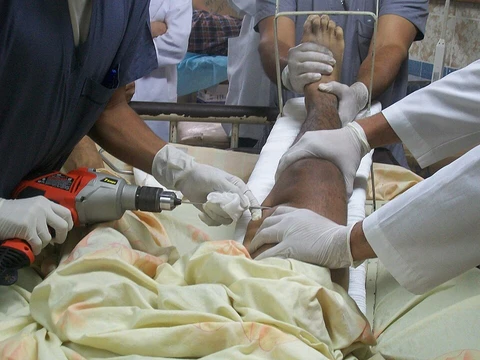
Traumatology
Study of wounds and injuries from accidents or violence.

Wikipedia / Wikimedia Commons
Traumatology is a medical field focused on the study of wounds and injuries resulting from accidents or violence, along with their surgical treatment and repair. The term comes from the Greek word *trauma*, meaning injury or wound. It is generally considered a branch of surgery, and in places where trauma surgery is not a distinct specialty, it typically falls under orthopedic surgery. It is sometimes referred to as accident surgery.
The field has two main branches: medical traumatology and psychological traumatology. Medical traumatology deals with the surgical procedures and physical therapy needed to repair damage from violence or accidents. Psychological traumatology addresses harm to a person's mental well-being caused by distressing events, which can also stem from overwhelming stress. This type of trauma often accompanies physical trauma that threatens survival or security, leaving individuals feeling overwhelmed, anxious, or threatened.
Trauma itself can be classified into several types. Acute trauma results from a single stressful or dangerous event. Chronic trauma comes from repeated, prolonged exposure to highly stressful situations. Complex trauma involves exposure to multiple traumatic events. Secondary, or vicarious, trauma occurs when a person develops trauma symptoms through close contact with someone who has experienced a traumatic event.
Medical and psychological traumatology are closely linked when considering types of trauma, such as car accidents, gunshot wounds, concussions, or PTSD from incidents. Medical traumas are repaired with surgery, but they can still cause psychological trauma and stress. For example, a teenager who breaks a wrist in a car accident and needs extensive surgery may later feel anxiety while driving. PTSD can be diagnosed after a person experiences intense traumatic events and reacts with fear, showing symptoms from three categories lasting at least one month: re-experiencing the event, avoiding anything associated with it, and increased psychological arousal.
Key guidelines for medical trauma care include airway management, monitoring, and injury management. Airway management is critical in emergency on-scene care, where first responders must ensure the airway is clear to maintain circulation and keep the patient calm. Monitoring patients to prevent shock is essential, with nurses checking blood pressure and h
- field
- Medicine
- subfield
- Surgery, Orthopedic Surgery
- also_known_as
- Accident surgery
- branches
- Medical traumatology, Psychological traumatology
- types_of_trauma
- Acute, Chronic, Complex, Secondary or vicarious
Lore & Background
Traumatology encompasses both medical and psychological branches. Medical traumatology focuses on surgical procedures and physical therapy to repair damage from violence or general accidents. Psychological traumatology deals with damage to psychological wellbeing caused by distressing events, often resulting from physical trauma that threatens survival and security, leaving people feeling overwhelmed, anxious, and threatened. Trauma can be classified as acute (from a single stressful situation), chronic (from repeated prolonged stress), complex (from multiple traumatic events), or secondary/vicarious (from close contact with a traumatized person).
Reader's Guide
Traumatology is significant as a specialized field addressing both the physical and psychological consequences of injury. Its guidelines for essential trauma care emphasize airway management, monitoring to prevent shock, and managing injuries—particularly head and neck injuries, which are a major cause of trauma-related death and disability worldwide. Psychological trauma care includes self-care approaches such as exercise and socializing with familiar associates, as exercise helps the nervous system 'unfreeze' from a traumatic state. Patient assessment tools include Advanced Trauma Life Support, the Revised Trauma Score, the Injury Severity Score, the Abbreviated Injury Scale, and triage. Wound assessment considers the nature, size, and extent of tissue damage, and forensic physicians or pathologists may examine traumatic wounds. The field's legacy lies in its integrated approach to treating the whole person after injury.
Did You Know?
- Traumatology is often considered a subset of surgery and may be a sub-specialty of orthopedic surgery.
- Psychological trauma can be classified as acute, chronic, complex, or secondary/vicarious.
- Head injuries are one of the major causes of trauma-related death and disabilities worldwide.
- Exercising for thirty minutes a day can help the nervous system 'unfreeze' from a traumatic state.
More in Traumatology 1-24
Spotted an error? Know more?
This is a living reference — every entry is fact-audited, and reader corrections feed straight into our audit queue. Suggest an edit · See this site's audit record