Frequently Asked Questions
The most-asked questions about traumatology.
What exactly is traumatology as a medical field?
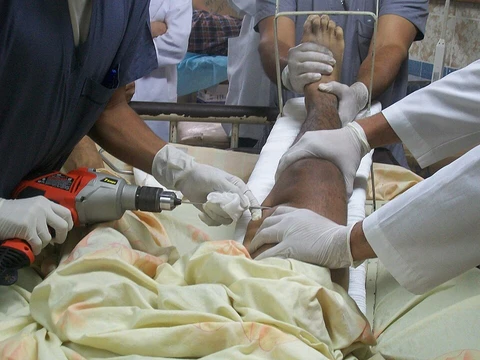
Traumatology is the branch of medicine focused on diagnosing and managing injuries caused by external forces—fractures, dislocations, lacerations, and internal organ damage. It sits at the intersection of surgery, orthopedics, and emergency medicine, with the primary goal of stabilizing and rehabilitating patients after acute trauma.
Who are the foundational figures every fan of the field should know about?
Hippocrates is often credited with early systematic fracture reduction, while Ambroise Paré revolutionized surgical wound care in the 16th century. In the modern era, R. Adams Cowley and Charles Runyan are widely recognized for establishing the organized trauma-center model that underpins contemporary care.
Where should a newcomer begin if they want to understand traumatology?
Start with core anatomy (skeletal, vascular, and visceral) and the ATLS (Advanced Trauma Life Support) framework, which teaches the ABCDE primary-survey sequence. From there, branching into orthopedic principles and damage-control surgery gives a solid working picture of how a trauma team thinks.
How does traumatology differ from general orthopedics?
Orthopedics covers the full spectrum of musculoskeletal disease, including degenerative conditions and elective reconstruction, whereas traumatology zeroes in on the acute, often multi-system injuries that arrive through the emergency department. In practice the two overlap heavily, but the trauma surgeon's mindset is built around minutes-to-hours decision-making under hemodynamic instability.
What is the 'golden hour' and why does it matter so much in trauma circles?
The golden hour refers to the roughly sixty-minute window after a severe injury during which definitive surgical intervention most dramatically improves survival. The concept drives the entire infrastructure of trauma-system design—pre-hospital triage, rapid transport, and 24/7 operative readiness at designated centers.
What are the key principles of damage-control surgery?
Damage-control surgery means performing the shortest life-saving operation possible (packing hemorrhage, simple fracture stabilization, temporary abdominal closure) and deferring definitive repair until the patient's physiology recovers in the ICU. It was formalized in the 1990s to break the lethal triad of hypothermia, acidosis, and coagulopathy in polytrauma patients.
What do the Level I, II, and III trauma-center designations actually mean?
A Level I center must provide 24/7 in-house coverage for every specialty, conduct research, and offer comprehensive rehabilitation, while Level II and III centers have progressively fewer mandatory services and may transfer the most complex cases upward. The tiered system was created so that a patient in a rural area still has a clear escalation pathway to the highest-capacity facility.
What are some of the most notable technological milestones in the field?
The introduction of the Ilizarov external fixator in the 1960s transformed treatment of open and infected fractures, and the widespread adoption of CT angiography in the 2000s cut unnecessary exploratory laparotomies dramatically. More recently, intraoperative 3-D reconstruction and robotic-assisted plating are reshaping how complex pelvic and long-bone injuries are managed.
How does a typical polytrauma patient's journey look from arrival to recovery?
The patient is triaged through the ABCDE survey, resuscitated in the trauma bay, taken to CT or the operating room, and then monitored in an ICU where ventilator weaning, nutrition, and early mobilization begin. Weeks to months later, the focus shifts to staged reconstructive surgery, physical therapy, and long-term functional rehabilitation.
What does the future of traumatology look like according to current research trends?
Regenerative-medicine approaches such as bone-morphogenetic proteins and 3-D-printed patient-specific implants are moving from trials into routine use, while AI-assisted triage algorithms aim to shorten pre-hospital decision times. Telemedicine and remote robotic surgery are also being piloted to extend Level I–equivalent expertise to underserved regions.